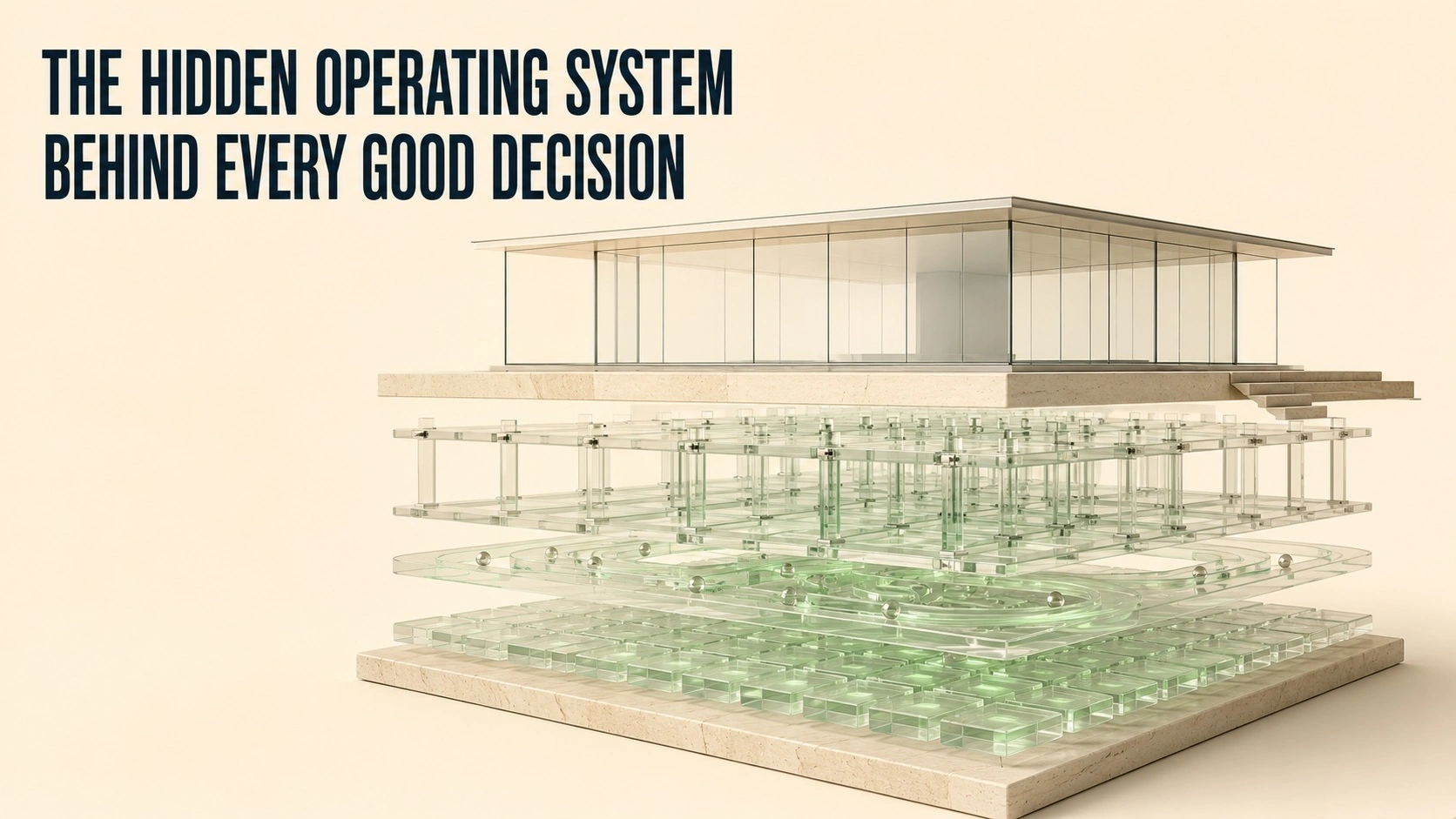
- Good decisions depend on more than accurate numbers. They require trusted data, relevant context, timely analysis, and connected planning.
- Information is often spread across different teams and systems, making it difficult to build one complete view of the business.
- Governed data creates a trusted foundation by giving teams consistent definitions and reliable information.
- Agentic Analytics helps businesses identify meaningful changes continuously instead of waiting for someone to find them manually.
- xP&A connects those insights to planning across finance, sales, marketing, operations, HR, and other functions.
- Together, data, Agentic Analytics, and xP&A create the foundation that helps leaders make decisions with greater confidence.
Good decisions rarely start in the meeting where they are made. They start much earlier, with whether the business trusts its numbers, whether the right context is available, whether important changes are noticed in time, and whether teams understand what a decision will affect.
Those things usually sit behind the scenes. You see the forecast. You see the dashboard. You see the recommendation. What you don't always see is the connected foundation underneath them.
That foundation is what makes a good decision possible. Without it, even experienced leaders can spend more time questioning the information than deciding what to do with it.
A Decision Is Only as Good as What Sits Behind It
Consider a company deciding whether to enter a new market.
The question sounds simple enough. Is the opportunity worth pursuing?
The answer isn't sitting in one report.
Finance needs to understand the investment and expected return. Sales needs to know whether the demand is actually there. Marketing has its own view of acquisition costs and customer response. Operations needs to know whether the business can support the additional demand. Hiring plans may have to change before the expansion even begins.
The decision belongs to leadership. The information required to make it is spread across the business.
That is where decision-making starts to become difficult. Each function can have a clear view of its own numbers while the organization still struggles to build one complete picture.
The problem isn't necessarily a lack of information. It is the distance between the pieces.
Numbers Need Context
A number rarely tells the whole story.
Revenue is growing. Good news?
Maybe.
If the growth is coming from heavy discounting, while customer acquisition costs are rising and margins are falling, the same number means something very different.
The figure itself hasn't changed. The context around it has.
This is why business decisions cannot depend on isolated metrics. The useful question is rarely just "What happened?" It is usually "Why did it happen, what does it affect, and what should we do about it?"
Answering that requires information from different parts of the business.
Customer data may sit in the CRM. Financial assumptions live in planning systems. Marketing activity sits in campaign platforms. Operational constraints exist somewhere else.
The decision brings all of those things together. The systems usually don't.
Trust Has to Come Before the Decision
This is where governed data becomes important.
If two teams use different definitions of revenue, a leadership discussion can quickly become a discussion about whose number is correct.
If customer acquisition is calculated differently by marketing and finance, evaluating marketing investment becomes harder.
If operational assumptions aren't reflected in financial planning, a plan can look perfectly reasonable until someone tries to execute it.
None of these problems are solved by simply collecting more data. People need to trust that the information they are using represents the same business.
Governed data creates that foundation. Consistent definitions, clear business rules, reliable information, and shared ownership make it possible for different functions to work from a common understanding.
Once that trust exists, the conversation can move where it should have started. What does this mean for the business?
The Business Also Needs to Notice Change
Trusted data helps people understand what they are looking at. But the business still needs to notice when something important changes.
Traditional analytics often depends on someone knowing where to look. A report is reviewed. A number stands out. Someone investigates. The finding reaches the people who need to know.
That process works until the business changes faster than the reporting cycle.
A shift in demand can happen between reviews. A customer segment can start behaving differently. A cost increase can quietly change the economics of a plan.
By the time someone notices, the opportunity to respond may already be smaller.
This is where Agentic Analytics changes the role of analysis. Instead of waiting for someone to start investigating, analysis can continuously look for meaningful changes across the business and surface what deserves attention.
The point isn't to make every decision automatic. It is to make sure important changes don't have to wait for someone to notice them.
Decisions Have Consequences Beyond the Room
There is another part of the problem that is easy to overlook.
A decision rarely ends when leadership agrees on it.
Increase marketing investment and demand assumptions may change. Enter a new market and hiring, operations, and finance may all need to adjust. Change pricing and customer behaviour can shift with it.
Every important decision creates another planning question.
This is why planning cannot sit separately from decision-making.
Extended Planning & Analysis connects planning across the functions that shape the outcome. It allows finance, sales, marketing, operations, HR, and other teams to understand how a decision affects the plans they are responsible for.
The decision becomes part of a connected business plan rather than an isolated executive choice.
The Layer You Don't See Is Often the Most Important
The best decision-making environments don't necessarily look complicated.
A leader asks a question. The numbers are trusted. The relevant context is available. Important changes have already been surfaced. Different teams understand what the decision will affect. The plan can move with it.
That experience feels simple because the complexity has been handled underneath.
Governed Data
Provides the trust that every function is working from the same numbers.
Agentic Analytics
Provides continuous understanding of what is changing across the business.
Extended Planning & Analysis
Connects that understanding to the plans and decisions across the business.
Together, they create the operating layer behind better decision-making. This same distance between insight and action is what we unpack in The Last Mile of Analytics Is Still Broken.
Good Decisions Are Built Before They Are Made
Organizations often judge a decision by its outcome.
Was the investment right? Did the forecast hold? Did the strategy work?
Those questions matter. But the quality of the decision was being shaped long before the result was visible.
It depended on whether the business had trusted numbers, enough context to understand them, analysis that could keep pace with change, and planning that showed what the decision would affect. Finance's role in that hasn't gone away, it has simply expanded, something we cover in Why FP&A Is No Longer Enough.
That is the hidden operating system behind every good decision.
Data creates the foundation. Agentic Analytics helps the business understand what is changing. xP&A connects that understanding to what the business plans to do next.
When those pieces work together, leaders don't have to spend the decision-making process reconstructing the business. They can focus on the decision itself.